
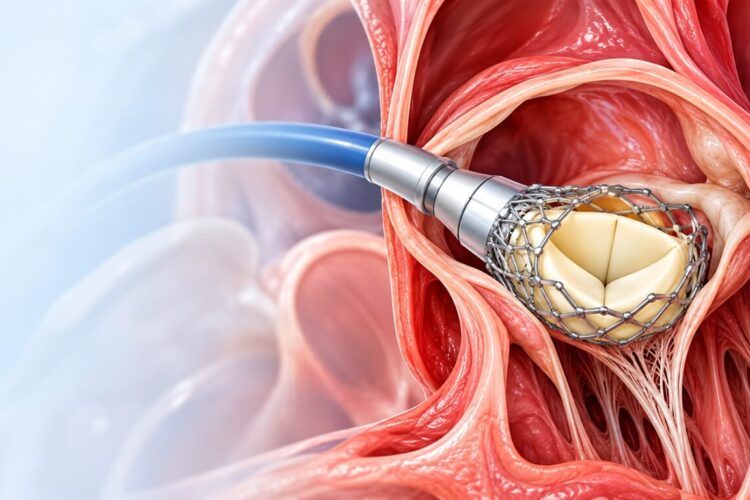
TMVR – Transcatheter Mitral Valve Replacement
A New, Less-Invasive Treatment for Some Patients with Mitral Valve Disease
The mitral valve is one of the four valves of the heart. It helps blood flow from the upper chamber of the heart (left atrium) to the lower chamber (left ventricle). When the mitral valve becomes severely diseased, the heart may have to work harder, leading to breathlessness, tiredness and swelling of the legs.
Traditionally, a severely diseased mitral valve may be treated with open-heart surgery to repair or replace the valve. However, some patients are at high risk for surgery because of their age, other medical conditions, previous heart surgery or poor heart function.
For selected patients, TMVR (Transcatheter Mitral Valve Replacement) may provide another treatment option.
What is TMVR?
TMVR is a procedure in which a new artificial mitral valve is placed inside the diseased mitral valve without traditional open-heart surgery.
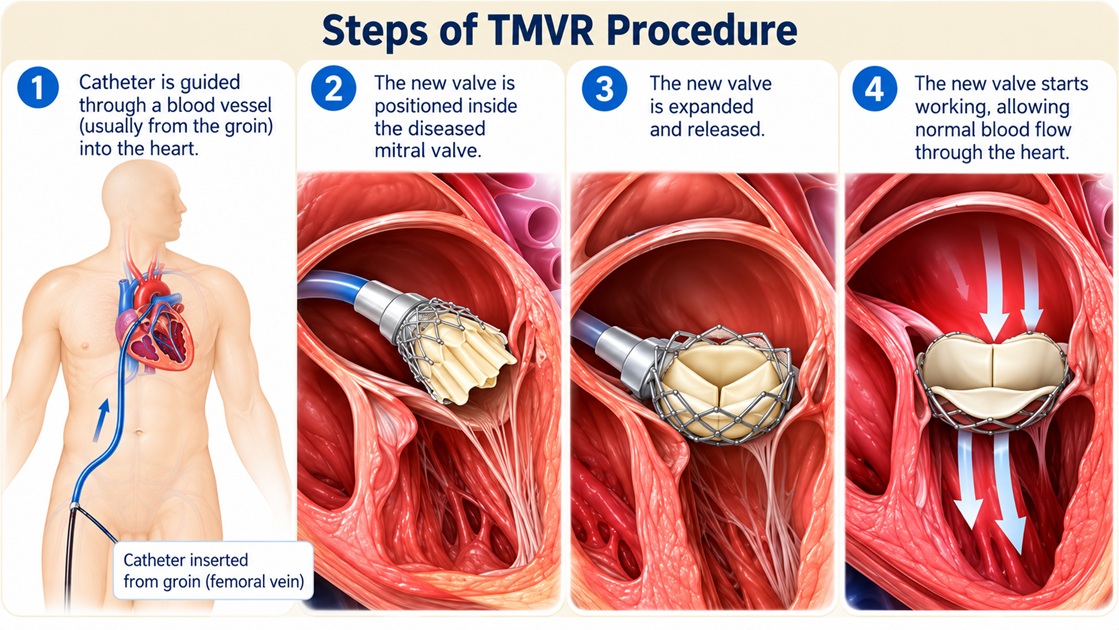
The replacement valve is usually delivered through a thin tube called a catheter. Depending on the type of TMVR procedure and the patient’s condition, the catheter may be introduced through a blood vessel, commonly from the groin, or through another carefully selected access route.
Once the new valve reaches the heart, it is positioned inside the mitral valve and expanded. The new valve then starts controlling the flow of blood through the heart.
Who may benefit from TMVR?
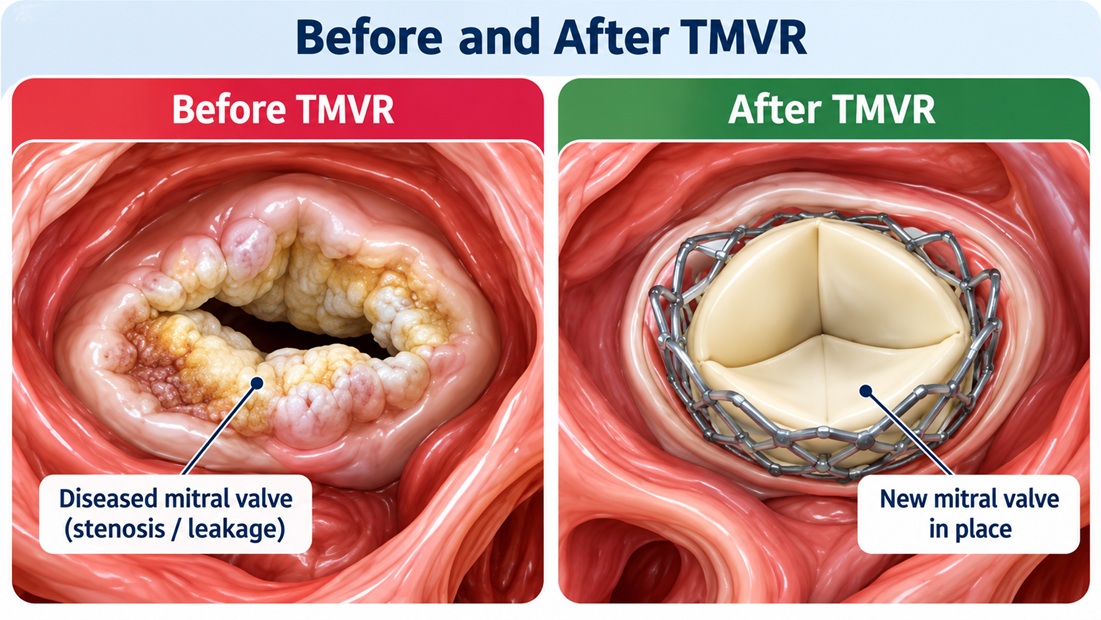
TMVR may be considered for carefully selected patients with severe mitral valve disease, particularly those who:
- Have severe mitral valve narrowing or leakage
- Have significant symptoms such as breathlessness or reduced exercise capacity
- Are considered high-risk for conventional surgery
- Have a previously replaced or repaired mitral valve that is no longer functioning properly
- Have certain types of failed surgical mitral valves or rings
Not every patient with mitral valve disease is suitable for TMVR. Detailed evaluation by a specialised heart team is essential.
How is the procedure performed?
Before TMVR, doctors perform detailed tests such as echocardiography, CT scans and other heart investigations to determine whether the procedure is suitable and to select the appropriate valve.
During the procedure:
- The patient is given appropriate anaesthesia or sedation.
- A catheter is carefully guided towards the heart.
- The new mitral valve is positioned within the diseased valve.
- The replacement valve is deployed.
- Doctors check that the valve is working properly and that blood is flowing normally.
The procedure is performed in a specialized cardiac catheterization laboratory or hybrid operating room by a multidisciplinary heart team.
What are the possible advantages?
For appropriately selected patients, TMVR can potentially:
- Avoid or reduce the need for traditional open-heart surgery
- Reduce the physical stress associated with major surgery
- Improve symptoms such as breathlessness
- Improve quality of life
- Allow recovery that may be faster than conventional surgery in some patients
However, the benefits depend greatly on the patient’s individual condition and the type of TMVR procedure performed.
Are there risks?
Yes. Like any heart procedure, TMVR has potential risks. These can include bleeding, infection, blood clots, stroke, heart rhythm problems, blood-vessel complications, leakage around the valve, obstruction of blood flow, kidney problems and, rarely, death.
The risk varies from patient to patient.
The important message
TMVR is an exciting development in the treatment of mitral valve disease, but it is not a treatment for everyone.
If you or a family member has severe mitral valve disease, discuss the available treatment options with a cardiologist. A specialized Heart Team can assess the valve, overall health, surgical risk and anatomy to decide whether surgery, valve repair, TMVR or another treatment is appropriate.
If you or a family member has been diagnosed with severe mitral valve disease, speak with a cardiologist or heart team to understand which treatment is most appropriate.
Early evaluation matters, book your consultation with TVMR Specialist in Ahmedabad
Do not ignore symptoms such as breathlessness, unusual tiredness, reduced exercise capacity, swelling of the feet or repeated hospitalisation for heart failure.
Early diagnosis and timely treatment can help protect the heart and improve quality of life.
TMVR represents an important step forward in structural heart disease care – offering a minimally invasive treatment option to selected patients who may not be suitable for conventional surgery.
Looking for a TMVR specialist in Ahmedabad? Consult Dr. Tejas V. Patel.
Image Credits: All images are generated by ChatGPT AI and is for representational purpose only.